The Loom Graveyard: How to Make Your Video Library Actually Useful
SpecSnap AI
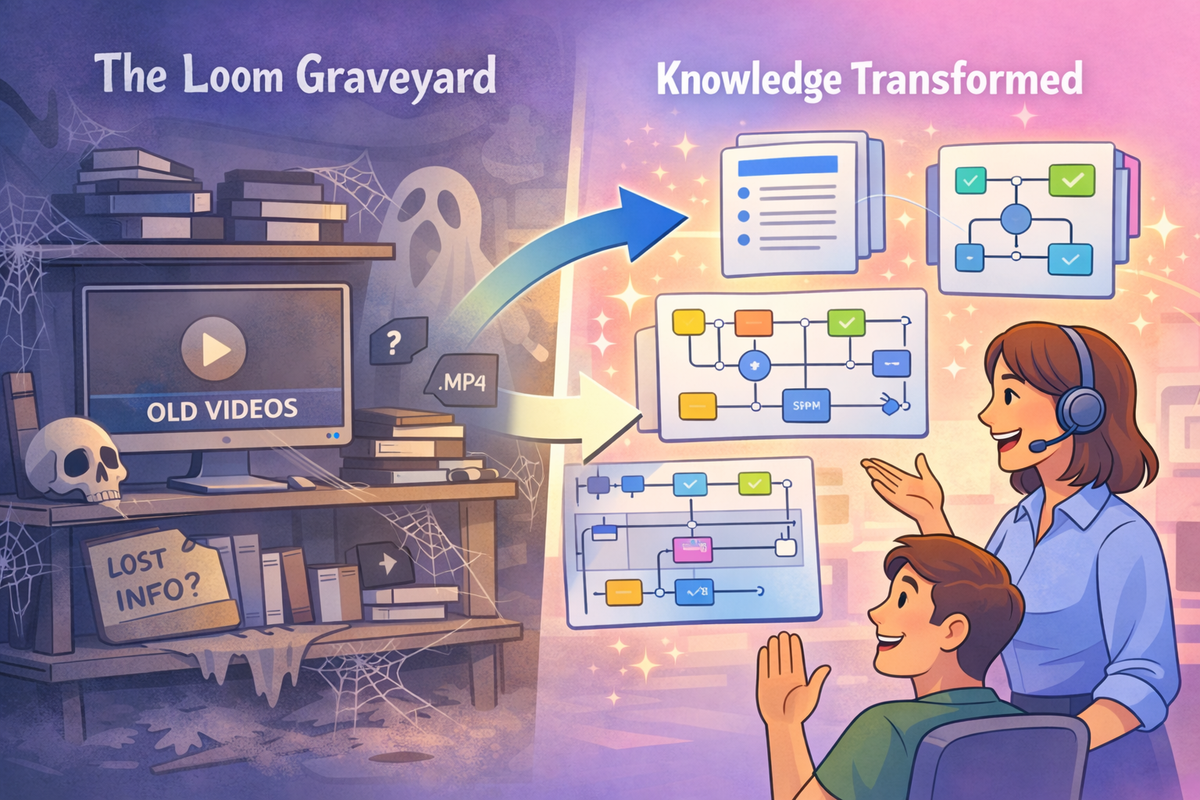
Every operations team has one.
A Loom folder (or a Zoom cloud library, or a shared drive full of MP4s) stuffed with recordings that nobody watches anymore. Walkthroughs from departed employees. Troubleshooting calls that solved a real problem once and were never turned into anything. Onboarding demos recorded by a founder who no longer does onboarding.
Call it what it is: a graveyard of institutional knowledge that took real time to create and is now functionally worthless.
This isn't a storage problem. It's a format problem.
Why video knowledge dies
Video is great for communicating in the moment. It's terrible for retrieving knowledge later.
Try searching a Loom for "what's the approval step in the expense process." You can't. You'd have to know which video contains that information, open it, scrub through it, hope the person narrating moves at a pace you can follow, and then write it down yourself.
Nobody does that. So they ask a colleague instead. Or they guess. Or they make a mistake that a well-documented process would have prevented.
The recordings exist. The knowledge exists. But because it's locked inside a video file, it might as well not.
The re-recording trap
The obvious fix, and the one most documentation tools are built around, is to re-record the process with a dedicated tool running in the background. Scribe, Tango, and similar tools are good at this. You perform the steps, they capture screenshots and annotations, and you get a structured guide at the end.
The problem is that re-recording assumes you have:
- The time to redo a 45-minute process from scratch
- Access to the same system state as the original recording
- The same person who originally knew the process (who may have left)
- A reason to believe the new recording will actually get done
For simple, short, repeatable tasks (a three-step workflow you do every day) this works fine. For anything complex, cross-functional, or owned by someone who's no longer around, re-recording is a fantasy.
Most teams know this. So the videos sit.
What "making video useful" actually looks like
The shift that changes this isn't better cameras or longer recordings. It's treating existing video as source material rather than a finished product.
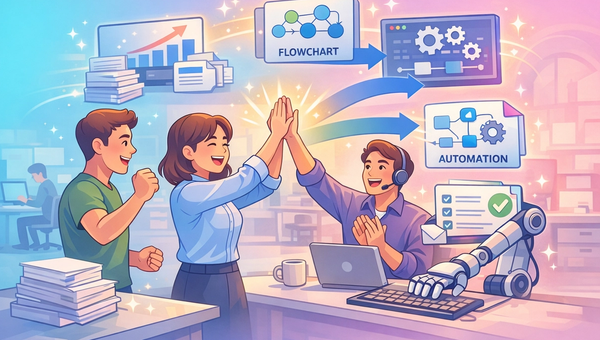
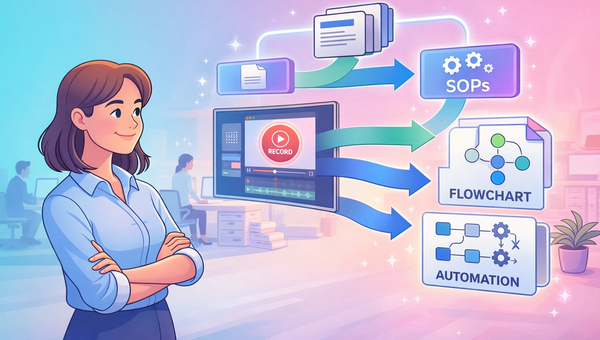
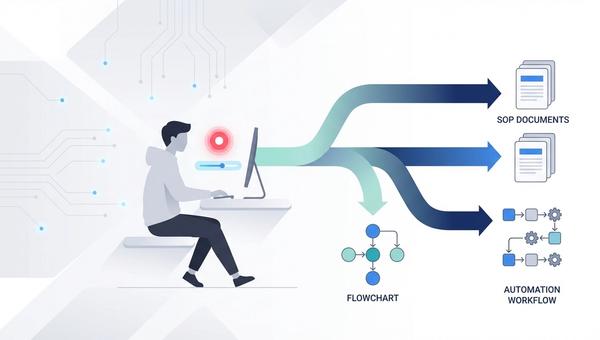
When you upload a recording to SpecSnap, the AI doesn't watch it the way a human would. It analyzes the footage for UI interactions, decision points, and process logic, then reconstructs those steps as a structured, annotated SOP. Timestamped steps link back to the original footage. Flowcharts visualize branching paths. The whole thing is editable, exportable, and searchable.
The recording goes from "a video that exists" to "a document your team can actually use."
A few scenarios where this matters most:
Offboarding knowledge capture. When someone leaves, their Loom library often contains the clearest explanation of how they did their job. That knowledge doesn't have to disappear with them. It just needs to be processed into a format that survives their absence.
Support team handoffs. A 20-minute troubleshooting call that solved a tricky customer problem is a draft SOP waiting to happen. Instead of a recording that one engineer watched once and forgot, it becomes a reusable guide for the next time.
Legacy system documentation. Older processes often only exist in someone's memory or in a recording from three years ago. Video-to-SOP conversion is frequently the only practical path to documenting these without starting from scratch.
Turning one-off demos into onboarding materials. That Loom a senior engineer recorded to explain a deployment process? It shouldn't live in one person's sent folder. It should be a step-by-step guide in your team's documentation hub.
The hidden cost of the graveyard
It's easy to frame undocumented processes as a knowledge management problem: slightly annoying, something to fix eventually.
The actual cost is more concrete. Every time someone can't find the right process and asks a colleague, that colleague stops what they're doing. Every time someone guesses wrong on a step, there's a correction to make. Every time a new hire has to shadow someone instead of following a guide, both people's time is spent on something a document could have handled.
None of these costs show up in a budget line. They show up as slower onboarding, more errors, and senior people answering the same questions repeatedly.
The video library you already have is the asset that fixes this. It just needs to be converted into something usable.
Getting started
If you have an existing Loom account, Zoom cloud library, or folder of screen recordings, you already have the raw material. The question is whether it's sitting there as a graveyard or working as a knowledge base.
SpecSnap lets you upload any MP4 or paste a Loom/Zoom link directly. No re-recording, no manual transcription. The AI handles the extraction. You get a structured SOP with screenshots, flowcharts, and exportable documentation in minutes.